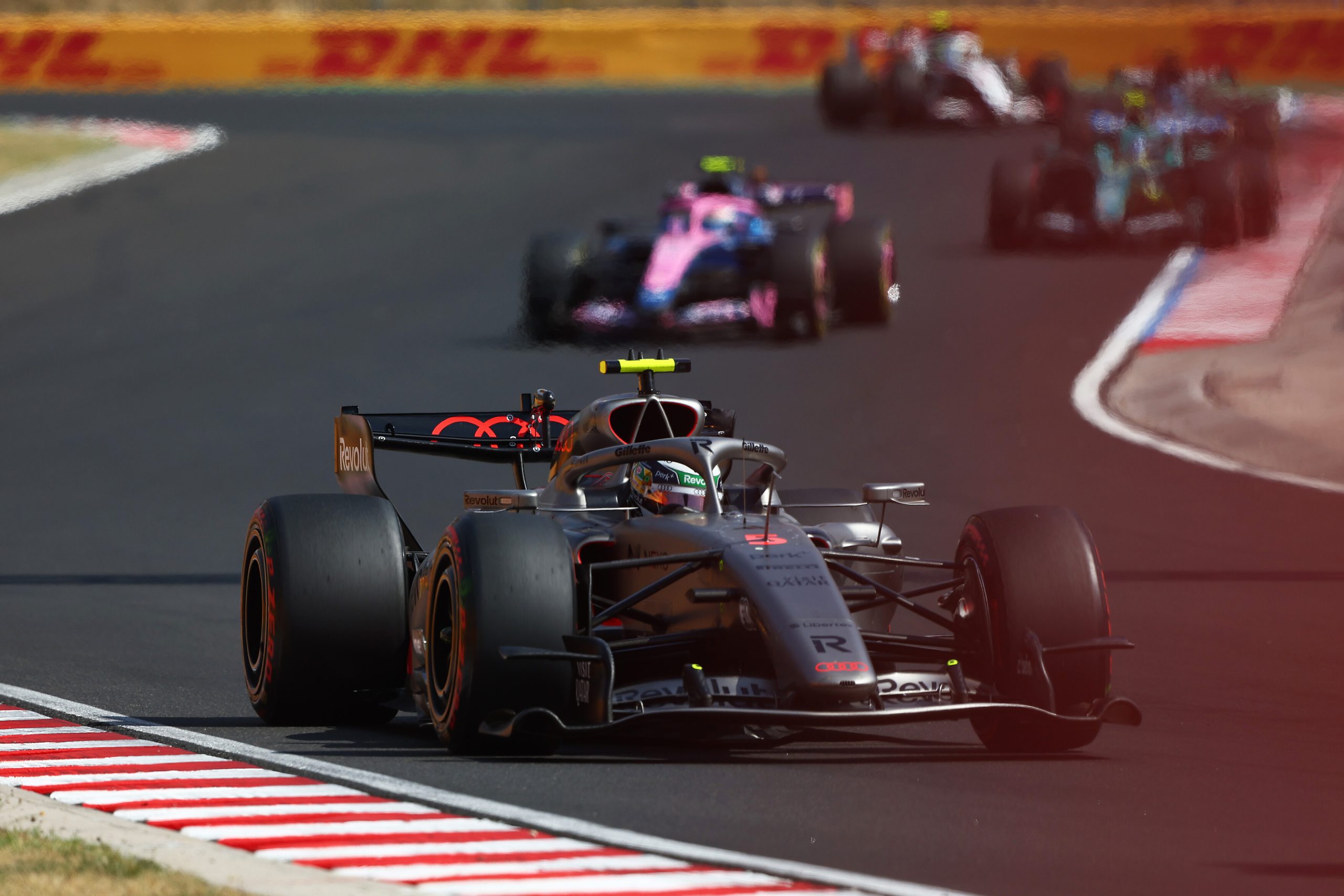
Gabriel Bortoleto has delivered a pointed defence of Formula 1’s much debated 2026 regulations, arguing that his colleagues should not be complaining about the cars demanding a different approach – they should simply adapt.
That puts the Audi driver somewhat at odds with the vocal chorus of criticism surrounding F1’s new-generation machinery.
The cars’ greater reliance on electrical power has forced drivers to rethink everything from corner entry to energy deployment, while the resulting complications have prompted F1 to already prepare significant revisions for 2027.
But Bortoleto believes the debate over “driving styles” misses the point entirely.
‘We should be able to adapt’
The 2026 regulations have created a very different driving challenge, with battery management now playing a central role in extracting performance.
Drivers have encountered issues such as superclipping, while Oscar Piastri’s frustration in Belgium highlighted how much influence the power unit’s automated energy-management systems can have, calling the result “crap racing”.
Yet Bortoleto rejects the suggestion that drivers should expect the machinery to accommodate their preferred methods.
“I don’t think I changed much my way of driving,” said the Brazilian in Hungary. “But again, I don’t like the sentence ‘driving style’, because I don’t believe that a Formula 1 driver should ever say that.
©Audi
“We should be able to adapt, even if it’s not natural maybe, but we should be able to adapt to any type of car and the way you need to drive, that’s why we do what we do and that’s why we are the 22 drivers in the world doing Formula 1.
“I think it’s just a matter of what car you have and how you need to drive them. I think from last year I didn’t change much the way to drive, but obviously you fine-tune a bit here and there, you know how the energy deploys out of some corners, so you know if you can push more the entry and you care about less on the exit, because there is no energy being deployed there.
“Or if you actually need to be a bit more careful on the entry, because there is going to be a long straight and a lot of energy being deployed, so you need to change, like last year was always constant, so you didn’t have to do so.”
That philosophy stands in contrast to drivers who have argued that the new regulations can interfere with the instinctive feel that has traditionally defined F1 driving.
For Bortoleto, however, adaptability is part of the job description.
The stopwatch is still the judge
The 21-year-old also challenges another criticism surrounding the 2026 cars: that their peculiar characteristics have somehow scrambled the competitive order and left naturally fast drivers struggling.
His answer is brutally simple – look at the standings.
“Do you see Verstappen being slow? Do you see a seven-time world champion being slow this year? Do you see Leclerc being slow? I don’t see them being slow,” he argued.
“I still see them very competitive, so I wouldn’t say fast drivers are slow actually. Lewis is a bit better than he was doing last year; Max is still performing like crazy, putting that car on the top; Lando, the world champion, the reigning world champion, he’s still quick.
“It’s the truth, so I don’t think we have seen slow drivers last year becoming quick and the quick guys slow, I think it’s still racing.”
And that may be Bortoleto’s most provocative point.
While others see the 2026 regulations as an awkward experiment that has taken too much control away from the driver, the Audi charger sees another test of what separates the very best from everyone else.
The machinery may have changed. The energy-management headaches may be new. But, in Bortoleto’s view, the stopwatch remains brutally impartial – and the fastest drivers are still finding a way to make it work.
Keep up to date with all the F1 news via X and Facebook
The post Bortoleto fires back at drivers criticising new-era F1 cars appeared first on F1i.com.